If you’ve ever followed an American recipe, you’ve probably come across measurements like “1 cup flour” or “½ cup sugar” — and wondered how that translates into grams. The truth is: there’s no single answer. Different ingredients have different weights, even if they take up the same volume.
That’s why this guide gives you a clear, easy-to-use conversion chart for the most common ingredients — so you can cook and bake with confidence.
Why convert cups to grams?
Using grams instead of cups makes a big difference — especially in baking.
✔ More accurate results
✔ Consistent texture every time
✔ Easier to scale recipes up or down
Measuring by weight removes guesswork, since cups can vary depending on how tightly ingredients are packed.
Flour & Dry Ingredients
| Ingredient | 1 cup | ½ cup | ¼ cup |
|---|---|---|---|
| All-purpose flour | 120 g | 60 g | 30 g |
| Whole wheat flour | 120–130 g | 60–65 g | 30–32 g |
| Almond flour | 95–100 g | 48–50 g | 24–25 g |
| Coconut flour | 110–120 g | 55–60 g | 28–30 g |
| Oats (rolled) | 90 g | 45 g | 22 g |
| Cocoa powder | 80–90 g | 40–45 g | 20–22 g |
| Cornstarch | 120–130 g | 60–65 g | 30–32 g |
| Breadcrumbs | 100–110 g | 50–55 g | 25–28 g |
| Ground nuts (general) | 100–120 g | 50–60 g | 25–30 g |
| Protein powder (whey/plant) | 90–120 g | 45–60 g | 22–30 g |
Powdered & Fine Ingredients
| Ingredient | 1 cup | ½ cup | ¼ cup |
|---|---|---|---|
| Powdered sugar (icing sugar) | 100–130 g | 50–65 g | 25–32 g |
| Brown sugar (packed) | 180 g | 90 g | 45 g |
| Granulated sugar | 200 g | 100 g | 50 g |
Sugar & Sweeteners
| Ingredient | 1 cup | ½ cup | ¼ cup |
|---|---|---|---|
| Granulated sugar | 200 g | 100 g | 50 g |
| Brown sugar | 180 g | 90 g | 45 g |
| Powdered sugar | 100–130 g | 50–65 g | 25–32 g |
| Honey | 300–340 g | 150–170 g | 75–85 g |
Butter & Dairy
| Ingredient | 1 cup | ½ cup | ¼ cup |
|---|---|---|---|
| Butter | 225–240 g | 110–120 g | 55–60 g |
| Greek yogurt | 230–240 g | 115 g | 60 g |
| Milk | 240 g | 120 g | 60 g |
Grains & Rice
| Ingredient | 1 cup | ½ cup | ¼ cup |
|---|---|---|---|
| Rice (uncooked) | 180–190 g | 90 g | 45 g |
| Couscous | 180 g | 90 g | 45 g |
Why dry ingredients vary so much
Dry ingredients can differ a lot in weight depending on:
✔ How finely they’re ground
✔ How tightly they’re packed
✔ Moisture content
For example:
- 1 cup cocoa powder is much lighter than flour
- 1 cup almond flour is lighter than regular flour
- 1 cup powdered sugar is very light and fluffy
👉 This is why baking by grams gives more consistent results.
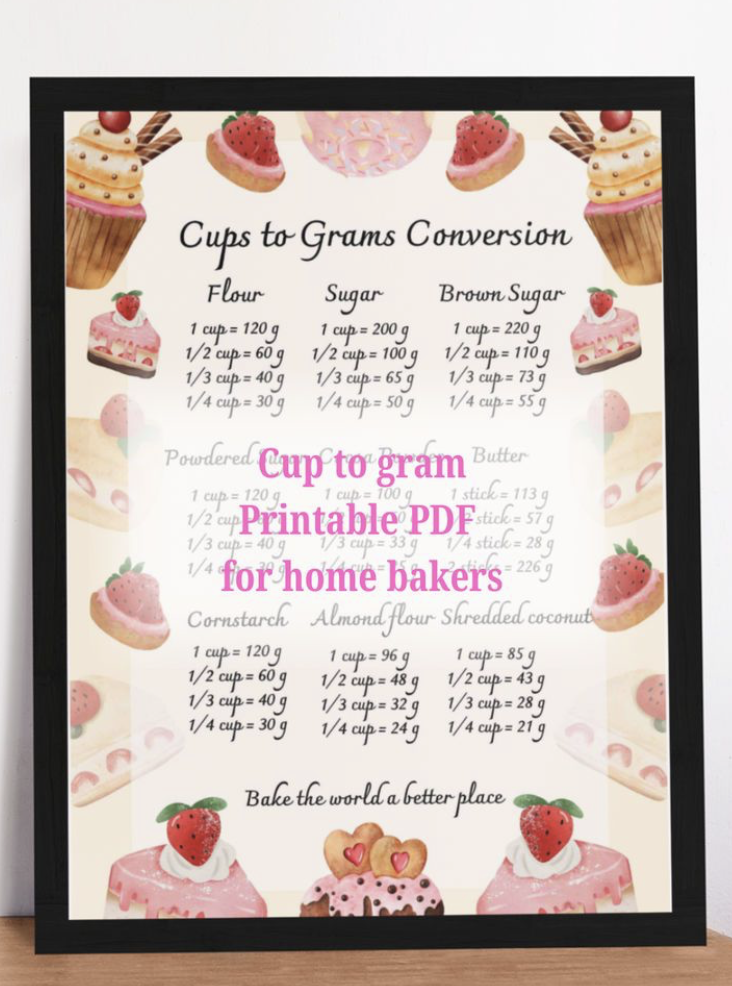
If you want a more visual and easy-to-use reference, you can also check out my Baking Measurements Guide (Cups to Grams Conversion Chart) — a clean, printable chart designed to keep right in your kitchen. It includes common baking ingredients like flour, sugar, butter, cocoa powder and almond flour, so you can quickly convert measurements without guessing.
 Nordic Table
Leave a comment